How ERP Software Transforms Modern Businesses: Uses, Benefits, and Real-World Success Stories
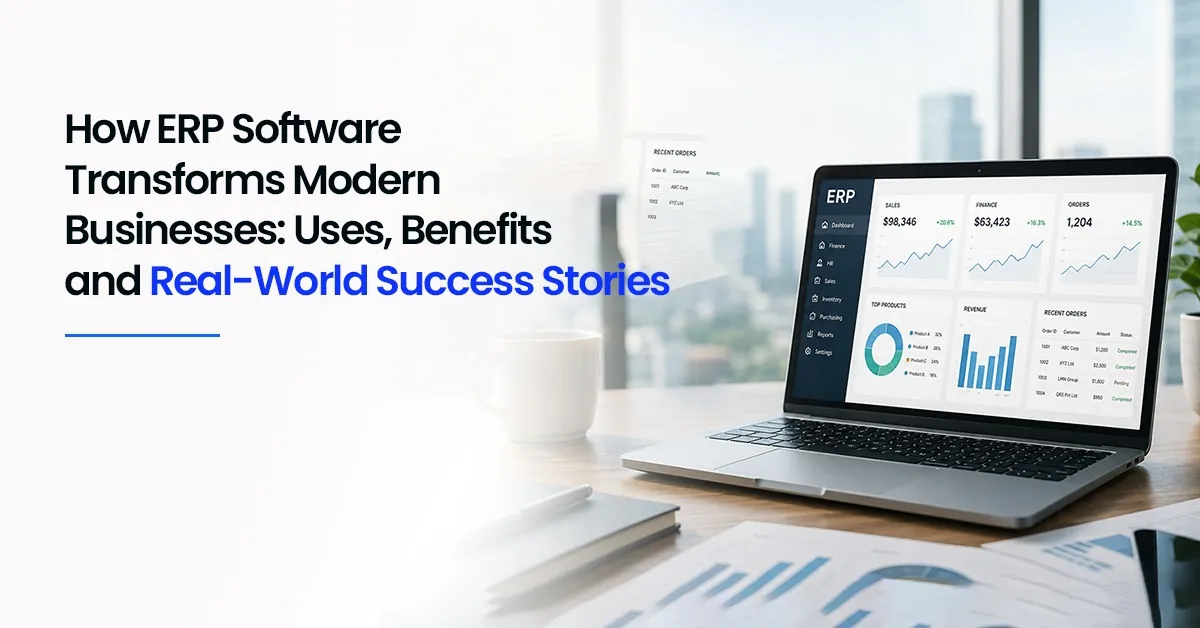

Enterprise Resource Planning (ERP) software has become the backbone of digital transformation for organizations of all sizes. As businesses face increasing complexity and competition, ERP systems offer a unified platform to streamline operations, enhance decision-making, and foster sustainable growth. Here’s how ERP software is revolutionizing modern enterprises, the key benefits it delivers, and real-world examples of success.
What Is ERP Software?
ERP software is an integrated suite of applications designed to manage and automate core business processes—such as finance, human resources, manufacturing, supply chain, sales, and procurement—within a single system. By providing a unified view of operations and a single source of truth, ERP breaks down information silos and promotes organizational efficiency.
How Modern Businesses Use ERP
Key Uses of ERP Software:
Financial Management: Real-time reporting, automated accounting, and streamlined payments.
-Supply Chain & Inventory: End-to-end tracking, vendor collaboration, and predictive inventory management.
-Human Resources: Employee performance tracking, recruitment, and payroll automation.
-Sales & CRM: Multichannel sales management, customer communication, and order fulfillment.
-Production & Logistics: Automated production planning, logistics integration, and real-time delivery tracking.
-ERP systems are highly customizable, allowing businesses to select modules that best fit their industry and operational needs—from manufacturing and retail to professional services and utilities.
Major Benefits of ERP Software
Implementing ERP software can deliver transformative benefits across the organization:
-Improved Efficiency: Automates routine tasks and standardizes workflows, reducing manual errors and process times.
-Real-Time Data & Insights: Centralizes data from all departments, enabling faster, data-driven decision-making.
-Cost Reduction: Lowers IT and operational costs through process optimization and reduced infrastructure needs, especially with cloud-based ERPs.
-Scalability: Supports business growth by allowing new modules and users to be added as needed.
-Better Resource Management: Offers visibility into assets, inventory, and workforce, optimizing resource allocation.
-Enhanced Collaboration: Breaks down departmental silos, improving communication and collaboration across teams.
-Compliance & Standardization: Simplifies regulatory compliance and ensures consistent processes company-wide.
-Customer Experience: Improves order accuracy, fulfillment speed, and customer service through integrated data and automation.
-According to industry research, 95% of businesses report significant improvements in process times, collaboration, and data centralization after implementing ERP systems.
Real-World Success Stories
Cadbury: Streamlining Supply Chain and Production
Cadbury, a global confectionery leader, faced challenges with rapid growth and complex distribution demands. By implementing SAP ERP, Cadbury overhauled its supply chain and warehouse operations, resulting in reduced operating costs and improved production efficiency. The key to their success was aligning ERP functionalities with business requirements and thorough planning.
Manufacturers: Quality and Asset Management
-Manufacturers leverage ERP to meet stringent product quality goals, manage assets, and control costs. With ERP, they gain end-to-end inventory control, monitor stock movements, and optimize procurement, resulting in better asset utilization and cost savings.
-Retailers: Omnichannel Integration
-Retailers have transformed by integrating ERP with e-commerce and in-store operations. This enables real-time inventory updates, streamlined order processing, and improved customer experiences, reducing cart abandonment and boosting sales conversion rates.
-Utilities: Asset Forecasting and Maintenance
-Utility companies use ERP to manage capital assets and forecast spare parts needs. This reduces service outages, lowers inventory costs, and ensures timely maintenance, enhancing service reliability and customer satisfaction.
The Future: Cloud ERP and Industry 4.0
Modern ERP trends are defined by cloud-based platforms, artificial intelligence, and integration with technologies like IoT and advanced analytics. Cloud ERP offers:
Real-time accessibility
Scalable infrastructure
Reduced IT overhead
Seamless integration with other digital tools
Industry 4.0 is accelerating ERP adoption in manufacturing, enabling real-time monitoring, predictive maintenance, and smart automation. Companies that embrace these innovations are more agile, responsive, and competitive in today’s digital economy.
Adhul Gireesh
Blog AuthorAuthor biography
Download our Mobile APP




Best Dental Practice Management Software & Advanced Dental ERP Suite
Door No.2328, 3rd Floor, Phase 2, Hilite Business Park, Hilite City, Kozhikode - 673014, Kerala, India
Get the latest updates from DentoBees
Click to
Subscribe