How ERP Technology Is Transforming the Future of Dental Clinic Software
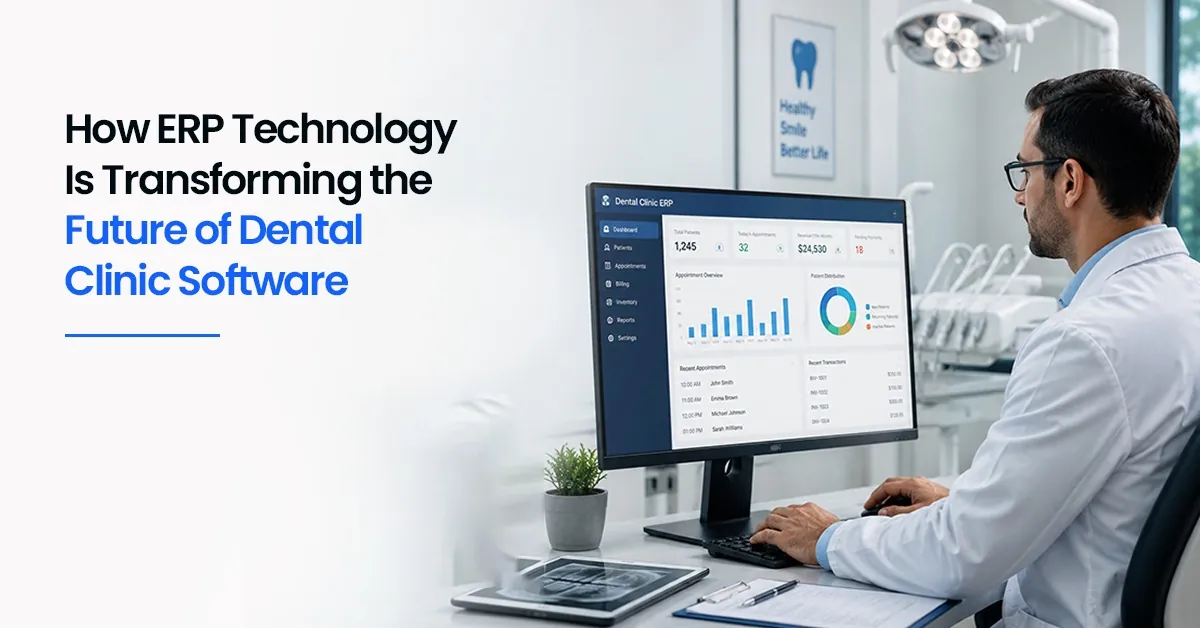

It's 8 AM. You walk into your clinic.
A stock order never arrived. An insurance claim has been sitting unresolved for three weeks. Your front desk team is juggling two calls while updating patient records by hand. And there are six patients on the books before noon.
This isn't a crisis. For many dental clinics across India, this is just a regular Tuesday.
Most dentists running practices like this believe things are fine — because the clinic functions. Patients get treated, bills go out and the day ends. What's harder to see is everything leaking quietly in the background: follow-ups that never happened, inventory that ran out mid-procedure and outstanding payments nobody flagged.
This is exactly the gap that ERP-powered dental clinic software was built to close.
What Is ERP — And Why Should Dentists Care?
ERP stands for Enterprise Resource Planning. The idea is straightforward: instead of running different parts of your practice on disconnected tools, everything lives in one connected system.
For a dental clinic, that means patient records, billing, inventory and staff management all working together. When a treatment is completed, billing updates automatically. When a consumable runs low, you get an alert. When you want to check last month's revenue, the data is already there — no manual consolidation needed.
That's ERP for dental practice. Not complicated. Just connected.
We've Gone Digital — But Have You Really?
This is one of the most common misconceptions in dental practice management.
Using an online appointment calendar is digitisation. Sending WhatsApp reminders is digitisation. Moving your patient register to Excel is digitisation. None of it changes how your clinic actually operates it just moves the same manual processes to a different surface.
Real transformation happens when your systems work together. When a completed appointment automatically updates the patient file, triggers an invoice and flags the next recall without anyone doing it manually. ERP is what makes that possible.
Without it, most clinics look like this:
1.Patient records in one app and billing in another and inventory on a spreadsheet
2.Stock counted by eye, updated only when it runs out
3.Revenue visible only at month end
4.Insurance claims filed and followed up manually
5.Appointment gaps
noticed only after they've passed
With ERP-powered dental clinic software:
1.Everything in one platform patients, billing, stock and staff
2.Automatic
low-stock alerts before it's a problem
3.Live
revenue visibility every day
4.Faster,
more accurate insurance submissions
5.Scheduling visibility
that helps fill gaps proactively
The difference isn't just efficiency. It's the difference between reacting to your clinic and actually running it.
What Dental Clinic Software Should Actually Cover
A lot of software marketed to dentists is really just an appointment manager with a billing tab added on. Before assuming a tool qualifies as clinic software, it's worth asking how much of your actual operation it handles.
Patient management — the full journey, not
just the appointment. Inquiry, treatment planning, clinical notes,
billing history, follow-ups and recall scheduling all in
one place.
Billing and revenue — GST-compliant invoicing, multiple
payment modes and outstanding balance visibility.
Revenue shouldn't be a mystery at month end.
Inventory — real-time
tracking of what's in stock and what's running low. In many
clinics, inventory is managed entirely by feel — which leads to either
overstocking or running out mid-treatment
Staff and payroll —
attendance, leave and salary management. The time saved on
manual HR admin every month adds up quickly.
Multi-branch operations — for clinics managing
more than one location, a centralised dashboard that shows everything without
separate logins.
Analytics — daily visibility into what matters:
under-booked days, outstanding payments, revenue trends. Information that
helps you make decisions, not just review the past.
3 Common Mistakes Clinics Make When Choosing Software
Choosing a tool for one problem. Many clinics adopt software to fix one pain point usually appointments or billing. Six months later, they're running three tools that still don't talk to each other. The disconnection problem hasn't been solved it's just slightly more organised.
Prioritising price over fit. The real cost of bad software isn't the subscription it's the hours lost to workarounds, the revenue that leaks through gaps and the eventual pain of migrating to something better. Price matters but fit matters more.
Not thinking about the team. Even great software fails if the clinic team doesn't use it consistently. A tool with a steep learning curve or confusing interface gets quietly abandoned within weeks. Ease of adoption should be a primary criteria, not an afterthought.
Why Indian Dental Clinics Feel This Pressure More Than Ever
Patients today book online, compare clinics on Google and arrive with expectations already formed. They expect timely follow-ups, transparent billing and a smooth experience end to end. When the back end runs on manual effort, the front-end experience suffers even when the clinical work is excellent.
Add GST compliance, e-billing requirements and the complexity of growing across multiple locations, and the operational load on Indian dental clinic teams has grown considerably without most clinics adding the infrastructure to handle it.
What usually happens is the dentist-owner ends up spending a meaningful part of their day on operational firefighting instead of clinical work. Most have accepted this as normal.
It doesn't have to be.
The demand for reliable dental software in India has grown because the clinics leading their local markets have figured this out. Operational excellence is increasingly a competitive differentiator not just a back-office concern.
A Scenario That Plays Out in Clinics Regularly
A patient completes a root canal. The treatment is excellent. But the bill gets raised the next day because the front desk was busy at closing. The patient has a question about one line item the treating dentist isn't available. Payment gets delayed. Nobody follows up because nothing flags it automatically.
Two weeks later, it's still outstanding spread across a register, a WhatsApp thread and someone's memory.
With the right dental clinic software, the completed treatment triggers the invoice automatically. Outstanding balances show on a dashboard. Follow-up reminders go out without anyone having to remember.
The clinical outcome is identical. The operational and revenue outcome is very different.
How Dentobees Fits Into This
Dentobees was built specifically for dental clinics — not adapted from a hospital system or a generic business ERP. The workflows, billing logic and inventory structure are all designed around how dental practices actually operate.
It covers the full scope: patient lifecycle management, GST-ready billing, real-time inventory alerts, staff and payroll, multi-clinic dashboards and daily analytics — in one platform, available on desktop and as a mobile dental app.
For solo practitioners, it brings operational structure without unnecessary complexity. For growing dental chains, it provides the centralised visibility that makes multi-location management workable. And it's built and priced for the Indian market — no enterprise implementation costs, no six-month rollout.
The goal isn't to add another tool. It's to replace the five disconnected ones most clinics are already using.
Key Takeaways
ERP for dental practice means connecting patients, billing, inventory and staff into one system — not five separate tool
Digitisation and real operational transformation are not the same thing
The
biggest costs in most clinics are invisible — missed follow-ups,
inventory gaps, unreconciled revenue
When
evaluating dental clinic software, prioritise full-operation
coverage, ease of adoption and Indian billing compliance
For
dental practices in India, operational software has moved from
nice-to-have to a genuine competitive requirement
FAQ
What is ERP and how does it help a dental clinic?
ERP connects scheduling, billing, inventory and staff
management into one platform. The result is less manual work,
fewer errors and clear daily visibility into how your clinic
is performing operationally and financially.
How is dental clinic software different from a booking
app?
A booking app handles appointments. Dental clinic software manages the
full patient journey — treatment history, billing, follow-ups and
recall — alongside inventory, payroll and reporting. It's a
system not a single tool.
Is ERP software only for large dental chains?
No. Modern dental ERP platforms are cloud-based, affordable and built
for clinics of every size. The problems they solve exist at every scale — they
just become more costly as the clinic grows.
What should Indian dental clinics look for in software?
GST-compliant invoicing built in, UPI and multiple payment mode support,
responsive local support and pricing suited for private dental practice — not
large hospital groups.
When is the right time to start using dental
clinic software?
Earlier than most clinics think. Building good
operational habits before the complexity grows is significantly easier than
fixing broken ones after. The best time to start is now — not
when you're already overwhelmed.
Navyatha VP is a professional content writer specializing in healthcare, dental software and digital marketing. With a background in Mass Communication and Journalism, she focuses on distilling complex topics into clear, actionable insights that help professionals make informed decisions. When she isn’t crafting digital content, Navyatha explores new social media trends, travels or loses herself in a good book.
Download our Mobile APP



Best Dental Practice Management Software & Advanced Dental ERP Suite
Door No.2328, 3rd Floor, Phase 2, Hilite Business Park, Hilite City, Kozhikode - 673014, Kerala, India
Get the latest updates from DentoBees
Click to
Subscribe