Common Billing Mistakes in Dental Clinics and How Software Can Fix Them
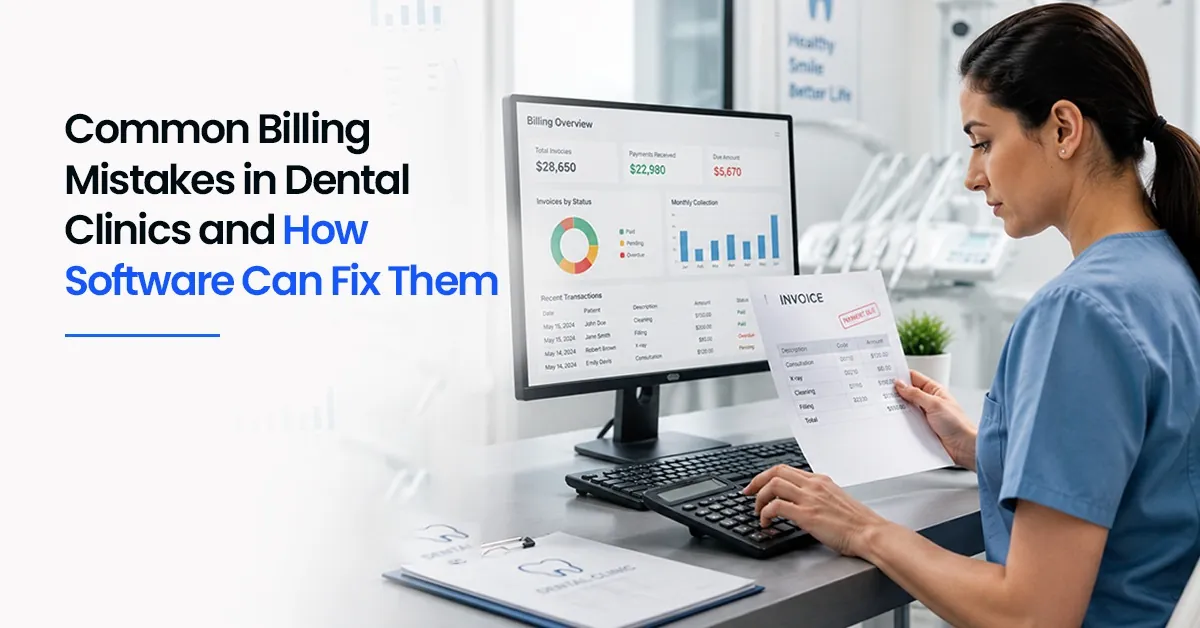

Running a dental clinic is not just about treating patients. Dentists and clinic staff also need to manage appointments, patient records, treatment documentation and billing. Billing is a critical part of these responsibilities because it directly impacts the clinics revenue and financial management.
In fact, the billing errors occur more often than many clinics realize. According to studies on healthcare revenue management are approximately 70% of billing errors are caused by manual data entry errors. Incorrect patient information, coding errors or incomplete records can easily occur when using manual systems such as paper records or spreadsheets.
Such errors can lead to delayed payments, denied insurance claims and financial losses for the clinic. Understanding what the dental billing process is and improving billing management can help reduce these errors and make the clinic more efficient. Today was many clinics are moving toward dental clinic management software to manage their records and billing more accurately.
What Is the Dental Billing Process?
The system that dental clinics use to record treatment for create invoices and get payments from customers or insurance providers is known as the dental billing process. It guarantees accurate documentation and billing for each dental service provided.
Clinics can prevent revenue loss and maintain accurate financial records by using a well-organized billing system. Errors can easily happen when billing is done by hand which can have an impact on patient trust as well as clinic revenue. Because of this is many clinics now rely on software for dentists to organize their records and improve the overall workflow.
What Are the Steps of the Billing Process?
In order to help clinics keep accurate records the dental billing process usually consists of a number of crucial steps.
1. Registration of Patients
When a patient comes into the clinic the procedure starts.
Their medical history, contact information and personal details are all
documented.
2. Records of Treatment
The dentist documents the procedures carried out following
consultation or treatment.
3. Billing Code Assignment
Every dental procedure has a unique billing code that is
used for insurance and paperwork.
4. Creation of Invoices
The clinic creates a bill based on the procedure and
treatment codes.
5. Collection of Payments
Patients can pay with insurance, cash, a card or a digital
payment.
6. Monitoring PaymentsThe clinic tracks whether payments are completed, partially paid or still pending.
The clinic must track whether payments have been made in full in part or if any balance is still due. Many clinics use a dental clinic management software to keep track of payments more easily.
What Billing Codes Do Dentists Use?
Standardized procedure codes are used by dentists to identify between different dental treatments. Processing insurance claims and recording services is made simpler by these billing codes.
For example, there are different billing codes for dental cleanings, fillings, root canal treatment and tooth extractions. Maintaining consistency and transparency in the billing system is made easier by using the appropriate codes. In many clinics in these codes are organized using dentist software that helps maintain accurate treatment records.
What Is the 2-2-2 Rule in Dentistry?
In dentistry the 2-2-2 rule is a guideline that helps with follow up care and patient communication.
The following practices are usually included in:
1.After an important dental procedure, get in contact with the patient within two days.
2.If additional treatment is needed and make the next appointment within two weeks.
3.Encourage regular dental checkups every 2 months or periodically depending on the treatment plan.
By following this guideline that dental clinics may improve patient relations and provide better care. Some clinics also use reminder features in their dental app to maintain regular communication with patients.
Common Billing Mistakes in Dental Clinics
Manual procedures cause billing problems for many dental clinics.
Among the most common mistakes are:
1. Errors in Manual Data Entry: Treatment charges or patient data may be entered incorrectly.
2. Absence of Treatment Fees: Some procedures are materials or consultation fees are accidentally missed from
the bill.
3. Billing in Duplicate:
If records are not kept up to date and the same treatment could be billed
twice.
4. Incorrect Tracking of Payments:
Clinics might forget if a patient has paid in full or if there is still a
balance due.
5. Lost Paper Records:
Paper invoices can easily be misplaced or damaged.
Using modern systems like dental ERP software can help clinics avoid many of these issues.
How Dentobees Helps Dental Clinics Manage Billing
Dentobees is a dental clinic management platform that helps dental clinics simplify their daily operations.
With Dentobees, clinics can:
1.Generate automatic invoices based on treatmen
2.Maintain digital patient records
3.Easily track payments and outstanding balances
4.Review past billing history
5.Receive financial reports related to the clinics revenue
Digital systems like these are becoming common as dental software India solutions continue to grow in the healthcare sector.
Conclusion
Billing is a very important component to running a successful dental clinic. Understanding what the dental billing process is what are the steps in the billing process and what billing codes dentists use can help clinics manage their finances more efficiently.
Using digital software and management tools can reduce billing errors and make the clinics operations more efficient.
FAQ
1. What is the dental billing process?
The dental billing process is the method clinics use to record treatments,
prepare bills and receive payments from patients or insurance providers. Using dental software
can make this process easier and more organized.
2. What are the steps of the billing process?
The billing process usually starts with patient registration are followed by
treatment documentation, assigning procedure codes, creating invoices and
collecting payments. Many clinics manage these steps using dental clinic management software.
3. What billing codes do dentists use?
Dentists use standard procedure codes to identify different treatments such as
cleaning, fillings, root canal treatment and tooth extraction. Dentist software helps clinics manage these codes
accurately.
4. What is the 2-2-2 rule in dentistry?
The 2-2-2 rule is a follow up practice used by many dental clinics. It involves
contacting the patient within 2 days after treatment and scheduling the next
visit within 2 weeks. Clinics often use a dental app
to manage reminders.
5. Which software can dental clinics use for
billing solutions?
Dental clinics can use dental ERP software to handle billing, patient records
and payment tracking in one system. Platforms like Dentobees help simplify billing and improve
clinic management.
Navyatha VP is a professional content writer specializing in healthcare, dental software and digital marketing. With a background in Mass Communication and Journalism, she focuses on distilling complex topics into clear, actionable insights that help professionals make informed decisions. When she isn’t crafting digital content, Navyatha explores new social media trends, travels or loses herself in a good book.
Download our Mobile APP




Best Dental Practice Management Software & Advanced Dental ERP Suite
Door No.2328, 3rd Floor, Phase 2, Hilite Business Park, Hilite City, Kozhikode - 673014, Kerala, India
Get the latest updates from DentoBees
Click to
Subscribe